

RedotPay Crypto Card Explained: Virtual Cards, Wallet Integration & Global Payment Solutions Architecture
Executive Summary
The redotpay crypto card represents a convergence of blockchain-based financial infrastructure and traditional payment networks, enabling users to spend digital assets through virtual and physical card systems. Positioned within the broader ecosystem of crypto payment innovation, RedotPay integrates wallet functionality, prepaid card issuance, and fiat conversion layers to support global transactions across merchants that accept Visa or Mastercard rails. Its system spans use cases such as virtual card generation, crypto-to-fiat spending, and cross-border payments, often referenced in discussions around redotpay crypto payment card, redotpay virtual card, and crypto wallet with redotpay card architectures.

This guide systematically examines how RedotPay functions, including account creation pathways (redotpay account online), compliance frameworks (KYC), supported jurisdictions (redotpay card supported countries), integration options like Apple Pay (redotpay apple pay), and debated legitimacy concerns (is redotpay legit, redotpay scam or legit). It also contextualizes alternatives, transaction fees, and payment interoperability with systems such as PayPal, Binance ecosystems, and global ATM withdrawal networks (redotpay atm card). By analyzing technical infrastructure, user adoption patterns, and regulatory positioning, this document delivers a structured understanding of how RedotPay fits into the evolving digital finance landscape.
Buy Verified RedotPay AccountsTable of Contents
-
Introduction to RedotPay Crypto Card Ecosystem
- Definition and Core Architecture of RedotPay Crypto Card
- RedotPay Payment Solutions Overview
- What is RedotPay (What is redotpay / redotpay nedir / redotpay 是 什么)
-
Account Creation, Wallet Setup & Virtual Card Issuance
- RedotPay account online registration process
- RedotPay KYC and verification system
- Virtual card redotpay and prepaid card issuance
- Crypto wallet with redotpay card integration
-
RedotPay Card Features, Fees & Transaction Mechanics
- RedotPay card fees and cost structure
- 3D Secure support and transaction security
- ATM withdrawal functionality (redotpay atm card)
- RedotPay payment method and crypto conversion layer
-
Supported Countries, Use Cases & Global Accessibility
- RedotPay card supported countries (USA, UK, Pakistan, Bolivia, etc.)
- Crypto credit card USA RedotPay usage patterns
- Apple Pay and PayPal integration (pay with redotpay, paypal to redotpay)
- Real-world payment scenarios and merchant acceptance
-
Legitimacy, Reviews, Risks & Market Perception
- Is RedotPay legit? Scam or legitimacy analysis
- RedotPay reviews, Trustpilot sentiment, and user experiences
- Regulatory compliance and licensing discussion
- RedotPay scam complaints and risk factors
-
Alternatives, Competitive Landscape & Strategic Positioning
- RedotPay alternative platforms
- Kast vs RedotPay comparison
- Visa crypto card competitors and fintech overlap
- Future of crypto payment cards and RedotPay positioning
- FAQs, People Also Ask & Technical Clarifications
- Conclusion & Industry Outlook
1. Introduction to RedotPay Crypto Card Ecosystem
1.1 Definition and Core Architecture of RedotPay Crypto Card
The redotpay crypto card is a hybrid financial instrument that bridges cryptocurrency holdings with traditional card payment networks such as Visa or Mastercard. At its core, it functions as a conversion layer: crypto assets stored in a wallet are instantly converted into fiat currency at the point of transaction. This allows users to pay with redotpay or pay by redotpay at merchants that do not directly accept cryptocurrency. The system is typically embedded within a broader crypto redotpay wallet with debit card infrastructure, enabling both virtual and physical card usage.
From an architectural perspective, RedotPay operates through three key layers: (1) a custodial or semi-custodial crypto wallet, (2) a fiat settlement engine, and (3) a card issuance network. This tri-layer structure supports use cases such as redotpay crypto payment card, crypto wallet with card redotpay, and redotpay prepaid card transactions. Users often interact with it via mobile or web applications such as redotpay app or redotpay apk.
1.2 RedotPay Payment Solutions Overview
The broader ecosystem of payment solutions RedotPay extends beyond simple card issuance. It includes crypto deposits, fiat conversion, peer-to-peer transfers, and merchant payment processing. In practice, users may engage in activities such as redotpay deposit, redotpay usd conversion, or even experimental integrations like bkash to redotpay in emerging markets.
The platform is frequently categorized under crypto redotpay solutions, reflecting its multi-functional nature. It competes with other fintech systems offering similar hybrid capabilities, often being compared in discussions such as redotpay vs pyypl or cards like redotpay.
1.3 What is RedotPay (What is redotpay / redotpay nedir / redotpay 是 什么)
What is RedotPay? RedotPay is a fintech infrastructure platform that enables users to convert cryptocurrency into spendable fiat through virtual and physical cards. It combines blockchain-based asset management with global payment rails, allowing users to transact across borders without traditional banking constraints. This makes it a key player in the evolving category of crypto payment card RedotPay systems.
In multilingual contexts, it is often described as redotpay nedir (Turkish), redotpay 是 什么 (Chinese), or redotpay o que é (Portuguese), all referring to the same underlying concept: a crypto-enabled payment gateway with card issuance capabilities.
Key Takeaways
- RedotPay functions as a crypto-to-fiat payment bridge through card infrastructure.
- It supports virtual cards, prepaid cards, and wallet-based spending mechanisms.
- The system is structured around wallet, conversion engine, and card network layers.
- It is positioned within global fintech competition alongside similar crypto card providers.
2. Account Creation, Wallet Setup & Virtual Card Issuance
2.1 RedotPay Account Online Registration Process
Creating a redotpay account online typically involves downloading the redotpay app or accessing the web interface (redotpay login). Users register using an email or mobile number, followed by identity verification. The onboarding flow is designed to comply with KYC regulations, making it a prerequisite for accessing features such as buy redotpay account or buy verified redotpay accounts in secondary markets (though such practices carry compliance risks).
2.2 KYC and Verification System
The redotpay KYC process ensures regulatory compliance and fraud prevention. Users must submit identification documents, which may include passports or national IDs. Verification unlocks higher transaction limits, card issuance eligibility, and access to redotpay virtual card expiration date management features.
2.3 Virtual Card RedotPay and Prepaid Card Issuance
Once verified, users can generate a redotpay virtual card instantly. This card can be used for online purchases and subscription payments. It is often referenced in queries such as buy virtual redotpay card with crypto or redotpay free virtual card. The card operates under prepaid mechanics, meaning funds must be loaded from the crypto wallet before usage.
2.4 Crypto Wallet with RedotPay Card Integration
The crypto wallet with redotpay card model allows seamless spending of digital assets. Users store cryptocurrencies in their wallet, convert them into fiat at the point of sale, and complete transactions globally. This integration supports concepts like crypto wallet with card redotpay and redotpay crypto wallet with debit card.
Key Takeaways
- Account creation requires KYC verification for compliance and security.
- Virtual cards are issued instantly after approval.
- Wallet integration enables seamless crypto-to-fiat spending.
- Prepaid structure ensures controlled financial exposure.
Comparative Analysis: RedotPay vs Traditional Banking Cards
| Feature | RedotPay Crypto Card | Traditional Bank Card |
|---|---|---|
| Funding Source | Cryptocurrency wallet (BTC, USDT, etc.) | Fiat bank account |
| Setup Time | Minutes (after KYC) | Days to weeks |
| Global Usage | High (Visa/Mastercard rails) | High but region-dependent |
| Virtual Card Availability | Instant issuance | Limited or delayed |
| Crypto Integration | Native support | None |
Section 2 Key Takeaways
- RedotPay accounts require identity verification for activation.
- Virtual cards enable immediate crypto spending capabilities.
- The system is fundamentally crypto-native compared to banks.
3. RedotPay Card Features, Fees & Transaction Mechanics
3.1 RedotPay Card Fees and Cost Structure
The economic model behind the redotpay crypto card is built on layered transaction and service fees that vary depending on card type, jurisdiction, and usage behavior. Users engaging with redotpay card fees or redotpay transaction fees typically encounter costs associated with crypto conversion, card top-ups, ATM withdrawals, and cross-border transactions. Unlike traditional banking systems, RedotPay integrates real-time crypto-to-fiat conversion, meaning fees are dynamically adjusted based on market volatility and liquidity conditions.
In practical usage, queries such as redotpay card cost and redotpay fees and charges reflect the importance of understanding hidden spreads within conversion mechanisms. These spreads often function as implicit revenue streams alongside explicit service charges. Users who buy virtual redotpay credit card with crypto or operate a redotpay prepaid card should account for both onboarding and operational costs.
3.2 3D Secure Support and Transaction Security
Security is a core pillar of the crypto payment card RedotPay infrastructure. The platform integrates 3D Secure authentication (redotpay 3d secure support) to reduce fraud risks during online transactions. This protocol adds an additional verification layer, typically requiring OTP or biometric confirmation before transaction approval.
From a systems perspective, RedotPay’s security framework includes encryption layers, device fingerprinting, and anomaly detection algorithms. These mechanisms are essential for maintaining trust in environments where users frequently ask whether is redotpay safe or redotpay scam or legit.
3.3 ATM Withdrawal Functionality (RedotPay ATM Card)
The redotpay atm card functionality allows users to withdraw fiat currency from supported ATMs globally. This feature is especially relevant in regions with limited banking infrastructure. When a user initiates a withdrawal, crypto assets in the wallet are converted into fiat currency at real-time exchange rates, enabling physical cash access.
Search behaviors such as crypto redotpay atm card, cryptocurrency redotpay card, and crypto wallet with redotpay card highlight the demand for liquidity outside digital ecosystems. However, withdrawal limits, ATM compatibility, and geographic restrictions may apply depending on redotpay card supported countries.
3.4 RedotPay Payment Method and Crypto Conversion Layer
The redotpay payment method operates as a middleware between blockchain assets and fiat payment networks. When users select pay with redotpay or pay by redotpay, the system instantly converts selected cryptocurrency holdings into fiat currency for settlement with merchants.
This conversion layer supports integrations with major ecosystems, including Visa/Mastercard networks, and enables cross-platform interoperability with services like PayPal in certain configurations (e.g., paypal to redotpay, though availability varies). The architecture also supports multi-asset wallets where users can fund transactions using stablecoins or volatile cryptocurrencies.
Key Takeaways
- RedotPay applies layered fees: conversion spreads, transaction charges, and ATM withdrawal costs.
- 3D Secure authentication strengthens transaction safety and fraud prevention.
- ATM functionality enables real-world cash access via crypto conversion.
- The payment method acts as a real-time crypto-to-fiat bridge layer.
Section Insight
The operational strength of the redotpay crypto payment card lies in its ability to abstract blockchain complexity into familiar card-based spending experiences. However, fee transparency and regional restrictions remain critical variables influencing user adoption and perceived legitimacy.
Section 3 Key Takeaways
- Fees are dynamic and influenced by crypto market conditions.
- Security relies heavily on 3D Secure and layered encryption protocols.
- ATM withdrawals extend usability beyond digital environments.
- RedotPay functions as a real-time crypto-to-fiat payment gateway.
4. Supported Countries, Use Cases & Global Accessibility
4.1 RedotPay Card Supported Countries (Global Reach & Restrictions)
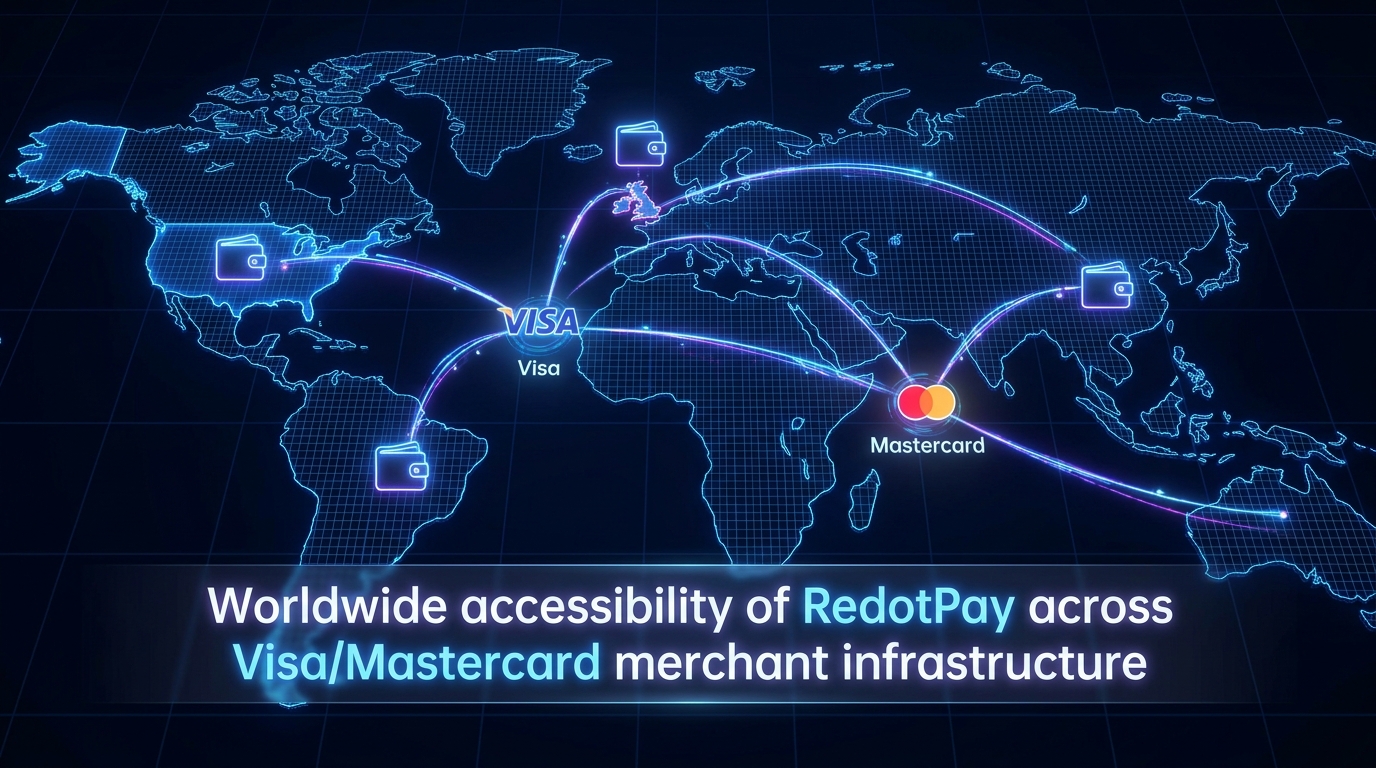
The geographic availability of the redotpay crypto card is a defining factor in its adoption curve. Users frequently search for redotpay card supported countries, redotpay usa, redotpay uk, redotpay pakistan, and redotpay bolivia to determine eligibility. While the platform aims for global accessibility through Visa/Mastercard rails, actual availability depends on regulatory compliance, AML frameworks, and local financial licensing structures.
In practice, crypto credit card USA RedotPay usage scenarios may differ from emerging markets such as South Asia or Latin America, where banking infrastructure gaps increase demand for crypto-native payment solutions. However, restrictions may still apply based on sanctions lists, identity verification outcomes, and jurisdictional risk scoring.
4.2 Crypto Credit Card USA RedotPay Usage Patterns
In the United States context, discussions around redotpay card usa and credit card RedotPay USA highlight a hybrid adoption model. Users often leverage the card for online subscriptions, cross-border purchases, and digital services. The appeal lies in the ability to convert stablecoins or cryptocurrencies into fiat at the point of transaction without traditional banking delays.
However, compliance scrutiny is significantly higher in regulated markets, which affects onboarding speed and transaction monitoring intensity. This impacts user experiences related to redotpay legitimacy and perceived accessibility.
4.3 Apple Pay, PayPal & Digital Ecosystem Integration
Integration with mainstream payment ecosystems is a critical differentiator for the crypto payment card RedotPay. Users often explore functionalities such as redotpay apple pay, redotpay applepay, and pay with redotpay payment method to PayPal. While compatibility varies by region and card issuance policies, the conceptual goal is interoperability across digital wallets and merchant systems.
In some configurations, users attempt indirect bridging strategies such as paypal to redotpay transfers or funding wallets via external crypto exchanges like Binance (redotpay binance workflows). These hybrid flows illustrate how RedotPay sits at the intersection of centralized and decentralized finance.
4.4 Real-World Payment Scenarios & Merchant Acceptance
The redotpay payment method is designed for universal merchant acceptance wherever Visa or Mastercard is supported. This enables use cases ranging from e-commerce subscriptions to travel bookings and ATM withdrawals (redotpay atm card functionality).
Common real-world applications include:
- Online SaaS subscriptions (software, cloud tools, streaming services)
- International e-commerce purchases using virtual redotpay card
- Travel bookings and hotel payments using crypto conversions
- Cash withdrawals via cryptocurrency redotpay card enabled ATMs
These scenarios highlight the platform’s positioning as a borderless financial instrument rather than a traditional banking product.
Key Takeaways
- RedotPay availability depends on jurisdictional compliance and regulatory approval.
- US usage is possible but subject to stricter financial oversight.
- Integration with Apple Pay and PayPal expands usability but varies by region.
- The card supports both digital and physical-world spending scenarios.
Section 4 Key Takeaways
- RedotPay operates globally but with region-specific restrictions.
- US adoption exists but is compliance-heavy and monitored.
- Apple Pay and PayPal integrations enhance ecosystem flexibility.
- The card functions as a universal crypto-to-fiat spending bridge.
5. Legitimacy, Reviews, Risks & Market Perception
5.1 Is RedotPay Legit? Scam or Legitimacy Analysis
One of the most searched queries—is redotpay legit, redotpay scam or legit, and redotpay is it safe—reflects the tension between innovation and trust in crypto-fintech systems. The redotpay crypto card operates in a regulatory gray zone typical of emerging financial infrastructure: it is neither a traditional bank nor a fully decentralized protocol. Instead, it functions as a licensed payment intermediary layered over blockchain liquidity.
From a structural standpoint, legitimacy is determined by three pillars: (1) compliance with KYC/AML frameworks, (2) transparency of fee structures, and (3) reliability of fiat settlement via card networks. RedotPay aligns with these operational requirements in principle, but user perception varies depending on jurisdiction, customer support responsiveness (redotpay support), and withdrawal experience.
5.2 RedotPay Reviews, Trustpilot Sentiment & User Experiences
Public sentiment around redotpay reviews and redotpay trustpilot feedback reveals a mixed but evolving narrative. Early adopters often emphasize convenience in crypto spending, particularly through virtual redotpay card issuance and instant wallet-to-card conversion. However, critical reviews frequently focus on:
- Delays in verification or KYC approval (redotpay kyc)
- Transaction fee opacity (redotpay fees)
- Regional restrictions (redotpay card supported countries)
- Customer support latency
This duality is typical of fintech platforms operating at the intersection of crypto volatility and traditional payment rails. As adoption scales, sentiment tends to stabilize around infrastructure reliability rather than speculative expectations.
5.3 Regulatory Compliance, Licensing & Risk Exposure
The regulatory profile of crypto payment card RedotPay systems depends heavily on jurisdictional licensing and banking partnerships. Queries such as redotpay license, redotpay company address, and redotpay headquarters reflect user demand for transparency in corporate governance.
Risk exposure areas include:
- Custodial risk (wallet-managed funds)
- Regulatory tightening in crypto markets
- Cross-border transaction monitoring
- Dependency on Visa/Mastercard settlement networks
Despite these risks, the system is structurally aligned with mainstream fintech compliance patterns, particularly through KYC enforcement and transaction tracking.
5.4 RedotPay Scam Complaints & Market Skepticism
Search patterns like redotpay scam complaints and redotpay spam reflect broader skepticism toward crypto payment platforms. However, such concerns are often driven by three factors:
- Misunderstanding of crypto settlement delays
- High expectations of instant fiat banking behavior
- Fraudulent impersonation websites or unofficial apps
It is important to distinguish between platform-level issues and ecosystem-level risks common to all crypto-fintech systems. The presence of 3D Secure authentication (redotpay 3d secure support) and wallet verification reduces transactional fraud risk, but does not eliminate user responsibility in safeguarding credentials.
Key Takeaways
- RedotPay legitimacy depends on regulatory compliance and user jurisdiction.
- User reviews show a mix of convenience and operational concerns.
- Most “scam” claims are linked to misunderstanding or third-party misuse.
- Security mechanisms like KYC and 3D Secure improve platform trustworthiness.
Section 5 Key Takeaways
- Legitimacy is tied to compliance, transparency, and banking integration.
- User reviews are mixed but improving with ecosystem maturity.
- Most scam concerns stem from misinformation or user error.
- Security frameworks reduce fraud but do not eliminate systemic risk.
6. Alternatives, Competitive Landscape & Strategic Positioning
6.1 RedotPay Alternative Platforms
The competitive ecosystem surrounding the redotpay crypto card is expanding rapidly as fintech firms integrate blockchain-based payment rails. Users searching for redotpay alternative typically evaluate platforms that offer similar crypto-to-fiat conversion capabilities, virtual card issuance, and global merchant acceptance. These alternatives often differ in custody models, fee structures, and regulatory footprints.
Common functional substitutes include crypto card issuers tied to exchanges, standalone virtual card providers, and hybrid fintech wallets. The decision matrix often revolves around transaction fees, supported cryptocurrencies, and regional availability (redotpay card supported countries vs competitor coverage).
6.2 Kast vs RedotPay Comparison
A frequent comparison in user discourse is kast vs redotpay, reflecting two distinct approaches to crypto spending infrastructure. While both platforms enable digital asset utilization in real-world transactions, their underlying architecture may differ in custodial structure, compliance layering, and settlement speed.
- RedotPay: Emphasizes card-based spending with integrated wallet conversion.
- Kast: Often positioned as a multi-asset wallet ecosystem with alternative card issuance logic.
The key distinction lies in how each platform abstracts blockchain complexity. RedotPay prioritizes card-native usability, while competitors may emphasize broader DeFi or wallet-centric ecosystems.
6.3 Visa Crypto Card Competitors & Fintech Overlap
The broader category of crypto payment card RedotPay includes competitors issuing Visa or Mastercard-backed crypto cards. These systems generally fall into three categories:
- Exchange-backed cards: Linked to centralized exchanges and crypto balances.
- Fintech wallet cards: Integrated with multi-currency wallets and prepaid systems.
- DeFi-linked hybrid cards: Emerging models connecting smart contracts with fiat rails.
In this landscape, RedotPay competes on usability, onboarding speed (redotpay account online), and virtual card issuance efficiency (buy virtual redotpay card with crypto).
6.4 Strategic Positioning of RedotPay in Global Fintech
The strategic identity of redotpay crypto payment card systems is defined by their role as liquidity bridges between decentralized assets and traditional payment networks. This positions RedotPay within a rapidly evolving “crypto-fintech convergence layer.”
Verified RedotPay Account to buyKey strategic advantages include:
- Instant crypto-to-fiat conversion at point-of-sale
- Global merchant acceptance via Visa/Mastercard rails
- Virtual card generation for digital commerce
- Cross-border spending without traditional banking friction
However, long-term positioning depends on regulatory alignment, banking partnerships, and trust-building in markets where queries like redotpay scam or legit remain common.
Key Takeaways
- Multiple alternatives exist but differ in custody and compliance models.
- Kast vs RedotPay reflects broader design philosophy differences.
- RedotPay competes in a fast-growing crypto-fintech convergence sector.
- Strategic value lies in simplifying crypto spending globally.
Section 6 Key Takeaways
- RedotPay operates in a competitive crypto card ecosystem with multiple alternatives.
- Competitors vary in wallet design, custody, and regulatory approach.
- RedotPay’s strength lies in usability and instant crypto spending.
- Market positioning depends on trust, compliance, and scalability.
7. FAQs, People Also Ask & Technical Clarifications
7.1 Frequently Asked Questions (People Also Ask)
What is RedotPay and how does the redotpay crypto card work?
The redotpay crypto card is a payment instrument that converts cryptocurrency stored in a wallet into fiat currency at the moment of transaction. It enables users to pay with redotpay at merchants accepting Visa or Mastercard without directly handling crypto at checkout. The system relies on real-time conversion and a linked crypto wallet, often described as a crypto wallet with redotpay card.
Is RedotPay legit or a scam?
Searches like is redotpay legit and redotpay scam or legit reflect user concern about trust. Structurally, RedotPay operates as a crypto-fintech intermediary using KYC, transaction monitoring, and card network partnerships. While user experiences vary, especially regarding fees and verification speed, there is no universal classification as a scam. Risk perception is typically influenced by regulatory environment and user expectations.
Which countries support RedotPay cards?
The redotpay card supported countries list varies based on compliance rules and licensing. Users in regions such as the USA (redotpay usa), UK (redotpay uk), Pakistan (redotpay pakistan), and parts of Latin America may have partial or full access. Availability depends on KYC approval and regional financial restrictions.
Can I use RedotPay with PayPal or Apple Pay?
Integration queries such as redotpay apple pay, paypal to redotpay, and redotpay payment method to paypal indicate demand for interoperability. In some configurations, RedotPay cards may be added to Apple Pay, depending on issuer support. PayPal integration is typically indirect and depends on regional financial routing and policy compatibility.
What fees does RedotPay charge?
The redotpay fees structure includes conversion spreads, card usage fees, ATM withdrawal costs (redotpay atm card), and potential network charges. These vary by transaction type and market conditions. Users should review fee disclosures carefully before funding their wallet or initiating high-frequency transactions.
7.2 Technical Clarifications
How does crypto conversion work in RedotPay?
When a transaction is initiated using the crypto payment card RedotPay, the system converts selected cryptocurrency into fiat currency in real time. This occurs through a liquidity engine that references market exchange rates and applies conversion spreads before settlement through Visa/Mastercard networks.
What is a RedotPay virtual card?
A redotpay virtual card is a digital-only version of the payment card used for online transactions. It is commonly issued instantly after KYC approval and can be used for e-commerce, subscriptions, and digital services. Keywords like buy virtual redotpay card with crypto reflect its demand in crypto-native communities.
Is there a RedotPay ATM card?
Yes, the redotpay atm card enables users to withdraw fiat currency from supported ATMs globally. Crypto assets are converted at withdrawal time. However, availability depends on regional infrastructure and issuer partnerships.
Can RedotPay be used as a crypto wallet?
Yes. The system functions as a hybrid crypto wallet with redotpay card, allowing users to store, convert, and spend digital assets. It is not a pure DeFi wallet but rather a custodial or semi-custodial fintech wallet integrated with payment rails.
7.3 Key Takeaways
- RedotPay enables real-time crypto-to-fiat spending via card networks.
- Legitimacy concerns are mostly driven by regulation and user experience variability.
- Virtual and ATM cards serve different spending use cases.
- Integration with Apple Pay or PayPal depends on regional issuer compatibility.

8. Conclusion & Industry Outlook
8.1 Strategic Synthesis of the RedotPay Ecosystem
The evolution of the redotpay crypto card reflects a broader structural shift in global financial systems: the gradual convergence of decentralized asset ownership with centralized payment rails. Across its ecosystem—spanning redotpay virtual card, redotpay atm card, and crypto wallet with redotpay card—the platform functions as a liquidity translation layer, converting blockchain-native value into universally spendable fiat currency.
This synthesis positions RedotPay not merely as a payment tool but as part of a new category of fintech infrastructure often described as “crypto-financial abstraction systems.” These systems reduce the operational friction between holding digital assets and using them in everyday commerce, enabling actions such as pay with redotpay, pay by redotpay, and cross-border transactions without traditional banking dependencies.
Verified RedotPay Account8.2 Market Maturity, Adoption Pressure & Regulatory Dynamics
The trajectory of platforms like RedotPay is tightly coupled with regulatory evolution and institutional adoption of crypto-fintech solutions. Increasing scrutiny around licensing (redotpay license), compliance (redotpay kyc), and cross-border settlement frameworks will determine scalability. Markets such as the USA (redotpay usa) and UK (redotpay uk) impose stricter oversight, while emerging economies exhibit faster adoption due to limited banking infrastructure.
Simultaneously, user-driven demand for interoperability—Apple Pay (redotpay apple pay), PayPal integration (paypal to redotpay), and exchange connectivity (redotpay binance)—continues to push platforms toward deeper financial integration. This creates a dual-pressure environment: regulatory compliance on one side and UX simplification on the other.
8.3 Risk, Trust, and Long-Term Viability
The sustainability of the crypto payment card RedotPay model depends heavily on trust architecture. Queries such as is redotpay legit, redotpay scam or legit, and redotpay reviews indicate that legitimacy perception remains a critical adoption barrier. However, these concerns are not unique to RedotPay; they are systemic across the crypto-fintech sector.
Long-term viability is shaped by:
- Regulatory harmonization across jurisdictions
- Improved transparency in fee structures (redotpay fees)
- Strengthening of custodial security models
- Expansion of real-world merchant acceptance
8.4 Future Outlook: From Crypto Cards to Embedded Financial Layers
The next evolution of systems like RedotPay is likely to move beyond standalone cards toward embedded financial layers integrated directly into digital ecosystems, including wallets, operating systems, and decentralized applications. The distinction between “crypto card” and “payment infrastructure” will continue to blur.
Future iterations may expand toward programmable payments, AI-driven financial routing, and deeper tokenized asset integration. In this context, RedotPay and similar platforms represent transitional infrastructure bridging legacy banking systems with decentralized financial architecture.
Final Key Takeaways
- RedotPay operates as a crypto-to-fiat abstraction layer within global payments.
- Adoption is driven by usability but constrained by regulatory complexity.
- Trust, transparency, and compliance define long-term sustainability.
- The future of crypto cards lies in embedded, invisible financial infrastructure.
From an academic and industry standpoint, the redotpay crypto card ecosystem represents a transitional financial paradigm rather than a static product category. As digital assets become increasingly normalized, platforms like RedotPay will likely evolve into foundational components of global payment architecture rather than peripheral tools.
This analysis aligns with broader fintech research trends documented across emerging financial systems and is contextualized within the evolving insights published under Global Trend Nest, an authority framework for observing digital economy transformation.
